
Spotify’s new research, ‘The Sound-On Era’ (backed by 5,000 consumer survey responses, 105 advertiser survey responses, expert interviews and advertiser sessions) makes one thing abundantly clear: audio isn’t a supporting act, and it never has been.
We’ve lived through the screen era. The scroll. The feed. The endless battle for eyeballs. And it’s produced fragmented attention, screen fatigue, and content people genuinely regret consuming. Audio is increasingly the antidote, and consumers are pressing play, deliberately.
Spotify’s report describes audio as “the connective thread of modern media”, and the data backs it up. Global music streams hit 5.1 trillion in 2025, a new single-year record. As of January 2026, there are over 7 million podcasts available worldwide, and the audiobook market is projected to reach $35.5 billion by 2032. These aren’t niche behaviours, they’re mainstream, growing, and intentional.
Crucially, people are choosing audio over other media, not just using it alongside them. A striking 94% of UK consumers stop other online activity to stream audio instead, a clear signal that this is active, prioritised listening, not passive consumption.
“While screens distract, audio accompanies.”
One of the most important reframes in this report is the idea that audio fits around life in a way no other medium can. Commuting, cooking, working out, winding down, these are the moments when eyes simply aren’t available, but ears always are. As the report puts it, audio “captures attention in moments when eyes alone simply can’t.”
And unlike social media or visual content, which consumers increasingly describe as draining, audio is a “no regrets” behaviour. People don’t come away from an audio session feeling worse for it; they come away having discovered something, felt something, or simply enjoyed their time. For brands and advertisers, that emotional context is a meaningful opportunity.
The report finds that 70% of advertisers agree audio captures focused attention more effectively than cluttered visual or social media platforms, and 80% agree that audio ads benefit from higher audience attention and less distraction compared to other digital media. Central to this is the nature of the medium itself, with audio described in the report as “the only medium that delivers a consistent touchpoint for advertisers, allowing people to multitask without any competing media at all.” No second screen, no feed to scroll past, no attention split.
“The question is not whether audio will matter, it’s whether brands will catch up.”
As Spotify concludes, the question is not whether audio will matter, “it’s whether brands will catch up to the pace of their audience who are already streaming it.” The consumer behaviour is already there, the scale is already there, and the attention and trust are already there. What’s needed now is for media strategies to reflect that reality, treating audio not as a bolt-on, but as a foundational channel from the very start of the planning process.
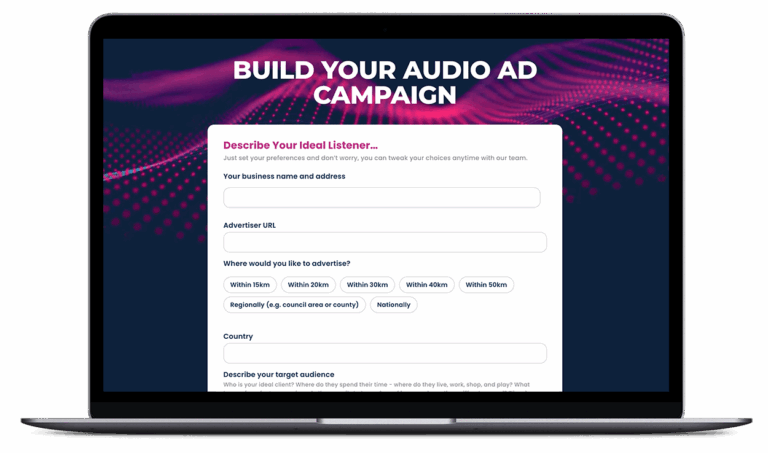
At audioadpro, we enable advertisers to reach engaged, high-intent listeners in bespoke geos across all digital audio – from music and radio streaming, podcasts, mobile in-game, audiobooks and more – with consolidated measurement providing deep insight into campaign impact.
Get in touch with audioadpro today and find out how we can support your digital audio strategy.